We are a professionally registered construction company delivering reliable residential, commercial, and industrial projects with quality, transparency, and expert engineering since 2019.
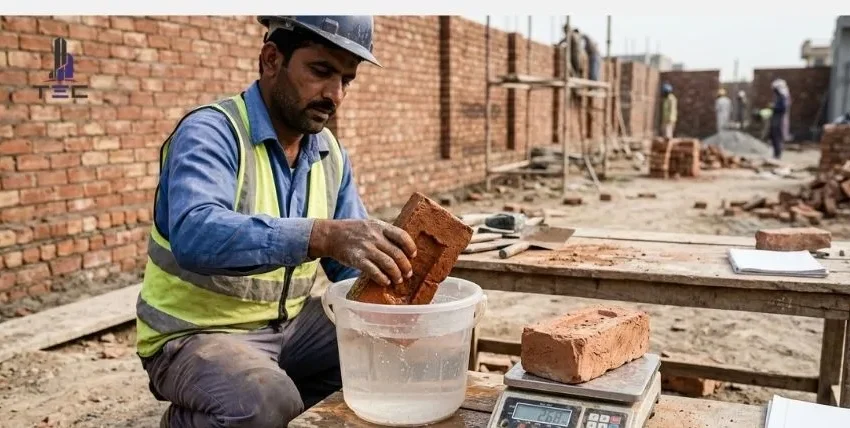
Building a strong house starts with good construction materials. Even if your naqsha (house plan) is well designed and your thekedar has experience, poor-quality cement, steel, bricks or sand can create problems during construction.
If you are building a house in Lahore, Bahria Town, Bahria Orchard, DHA, Wapda Town, Johar Town or Lake City, you should check materials before workers use them in your grey structure.
The good news is that you can perform several simple checks at your construction site without laboratory equipment. These checks can help you identify visible problems, but they cannot confirm every property of a material.
In this guide, TECCO explains how homeowners can check cement freshness, sariya markings, brick quality and sand cleanliness. You will also get a practical checklist for every material delivery.
Why Construction Material Quality Matters
Your house depends on the quality of its foundation, columns, beams, brickwork and roof slab (lenter). Each part needs materials that meet the specifications in the approved structural drawings.
Poor materials may contribute to weak concrete, cracks, water seepage, damaged brickwork or costly repairs. However, these problems can also result from poor design, incorrect mixing, bad workmanship or inadequate curing.
That is why material inspection should be part of your construction process, not something you do only when a problem appears.
Whether your plot is 5 marla (about 1,361 sq ft), 10 marla (about 2,723 sq ft), 1 kanal or 2 kanal, the same basic principle applies: check the material, compare it with the order and get approval before using it.
Plot-size note: These conversions use 1 marla = 272.25 sq ft and 1 kanal = 20 marla = 5,445 sq ft. Some Lahore housing societies use different plot-size conventions, so confirm the measurements in your plot documents.
1. How to Check Cement Quality for House Construction
Cement is a key ingredient in concrete and mortar. It is used in foundations, columns, beams, roof casting and brickwork.
When searching for the best cement for house construction in Pakistan, do not select a product only because it is popular or inexpensive. Follow the cement type and specifications approved by your structural engineer.
Simple cement quality checks
Check 1: Inspect the bags
- Bags should be intact, without tears or signs of water damage.
- Check the product name, cement type, manufacturer, batch information and applicable standard markings.
- Compare the bags with the supplier’s invoice and the material specification approved for your project.
Check 2: Look for hard lumps
Open a bag only when needed for inspection. Cement should generally be a fine powder.
Small, hard lumps may indicate that moisture has reached the cement. Do not assume that heavily lumpy cement is suitable just because some powder remains.
Check 3: Feel the powder
When safely handling a small amount, fresh, dry cement should feel fine rather than gritty or full of hardened particles. This is only a basic screening check, not proof of strength.
Check 4: Check storage conditions
Cement should be stored in a dry, covered area, raised above the floor and protected from damp walls and rain. Use a sensible stock rotation system so older bags are not forgotten.
What you cannot confirm by looking
You cannot reliably determine cement strength, setting performance or complete compliance with specifications by checking a bag or touching the powder.
If the cement is damp, heavily lumpy, unlabelled or of uncertain origin, separate it from accepted stock and ask the supplier and engineer how to proceed. Laboratory testing may be needed.
Important: Do not use cement from damaged or suspicious bags in foundations, columns, beams or lenter without the responsible engineer’s approval.
2. How to Check Sariya Quality
Sariya (reinforcement steel) helps concrete structural members carry loads. Its grade, diameter, quantity and placement must match the structural drawings.
Using the wrong steel can create serious structural risks.
Simple sariya quality checks
Check 1: Inspect the steel markings
Look for identifiable manufacturer marks, grade markings or other product identification where applicable. Compare these with the purchase order, delivery documents and specifications approved by the engineer.
A marking alone does not prove that the steel is genuine or meets the required strength.
Check 2: Check the diameter
The engineer or site supervisor should verify the bar diameter using a suitable measuring tool and the method appropriate for the type of reinforcement.
Do not select steel only by its appearance or by counting the visible ribs.
Check 3: Look for rust and surface damage
Light surface rust may not automatically make reinforcement unsuitable. However, deep corrosion, heavy flaky rust, pitting, oil, grease or other contamination needs professional assessment.
Steel should be stored off the ground and protected from conditions that cause deterioration.
Check 4: Check the grade and quantity
Compare the delivered steel grade, sizes, bundle labels and quantity with the approved order. Keep the delivery note and supplier details.
Check 5: Do not perform an unapproved bend test
Steel bending performance depends on the grade, diameter and applicable standard. Do not bend or re-bend bars at random on site to decide whether they are good.
If a bend test is required, it should be carried out using the applicable procedure and appropriate equipment.
Warning about duplicate or mixed steel
Steel from different manufacturers or grades may arrive in one delivery. Different sources are not automatically a problem, but every product must be identifiable and approved.
If the markings are missing, inconsistent or suspicious, keep the affected bundles separate and ask the engineer to verify them before installation. Material certificates or laboratory tests may be necessary.
3. How to Check Brick Quality
Bricks are widely used in house construction throughout Lahore. Their quality affects masonry strength, alignment, plaster performance and the amount of breakage during work.
Simple brick quality tests
Check 1: Look at the colour and shape
Good construction bricks should generally have a reasonably uniform appearance, with no excessive warping or widespread crumbling.
Colour alone cannot prove quality. Different clay compositions and firing conditions can produce different colours.
Check 2: Inspect the edges
Look for bricks with reasonably straight edges and a consistent shape suitable for the specified masonry work.
A large number of broken, badly cracked or irregular bricks can increase wastage and make straight brickwork harder to achieve.
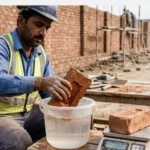
Check 3: Perform a water absorption check
This simple check can help identify bricks that absorb a large amount of water, but it does not replace a standard test.
- Select a representative brick and let it dry under suitable conditions.
- Weigh it and record the dry weight.
- Immerse it in water for the period specified by the relevant test method. A 24-hour soak can be used as a basic screening exercise.
- Remove it, wipe off surface water consistently and weigh it again.
- Compare the results with the applicable specification or have the engineer arrange a standard test.
The percentage of water absorption is calculated as:
Water Absorption (%) = [(Wet Weight − Dry Weight) ÷ Dry Weight] × 100
Do not use one universal pass/fail percentage without confirming the brick type and applicable standard.
Check 4: Inspect for cracks and weak material
Examine a sample from different parts of the delivery. Rejecting only the worst-looking brick while ignoring the rest of a poor batch will not solve the problem.
Check 5: Listen to the sound carefully
A clear ringing sound when two bricks are tapped together is sometimes used as a traditional screening method. However, this is subjective and cannot confirm compressive strength.
For structural or specification-critical masonry, ask the engineer whether formal testing is needed.
What should you do if bricks fail the checks?
Photograph the batch, record the delivery details and keep questionable bricks separate. Ask the supplier to resolve the issue before the material is used throughout the project.
4. How to Check Sand Quality for Construction
Sand is used in concrete and mortar. Its cleanliness, grading and suitability affect the performance of the mix.
Sand that contains excessive clay, silt, organic matter or other unwanted materials can affect construction quality.
Simple sand quality checks
Check 1: Look for visible impurities
Inspect the sand for:
- Excessive clay or mud.
- Organic waste, roots or leaves.
- Unwanted rubbish.
- Large amounts of fine dust or other contamination.
The sand should meet the specification for its intended use.
Check 2: Try the jar test for silt
A transparent jar can provide a rough indication of fine material in sand.
- Put a sample of sand into a clean, transparent jar.
- Add clean water and mix it thoroughly.
- Allow the material to settle undisturbed.
- Observe whether a visible layer of fine sediment forms above the main sand layer.
A visible layer may indicate silt or other fine particles. However, the jar test does not accurately distinguish all particle types or provide a reliable compliance result.
Do not use a homemade jar-test threshold as the only reason to approve or reject sand. If contamination is suspected, ask the engineer for the appropriate test.
Check 3: Look for clay lumps
Examine the sample for sticky clumps or material that behaves like clay. A few visible particles do not tell the whole story, so assess a representative sample rather than only the surface of the pile.
Check 4: Check the sand’s grading
Sand particles should have a suitable size distribution for the intended concrete or mortar mix.
Visual inspection cannot confirm grading. Where required, a sieve analysis should be carried out by a competent laboratory.
Check 5: Watch for unexpected changes
If a new delivery looks significantly different from previously approved material, do not mix it into the existing stock until the site supervisor has checked it.
Can you use any sand for concrete?
No. Sand suitable for one application may not be suitable for another. Follow the approved mix design and the engineer’s material specifications, particularly for structural concrete used in foundations, columns, beams and lenter.
5. Construction Material Delivery Checklist
Use this checklist whenever cement, sariya, bricks or sand arrive at your house construction site in Lahore.
Before unloading
- Compare the delivery with the purchase order.
- Confirm the material type, specification, quantity and supplier.
- Check the delivery note, invoice and available batch or product identification.
- Photograph the loaded vehicle and delivery documents where practical.
- Check for obvious signs of damage, contamination or suspicious packaging.
During unloading
- Inspect cement bags for tears, moisture and hard lumps.
- Check steel bundle markings, sizes and visible condition.
- Inspect bricks from different parts of the load.
- Examine sand for visible impurities and unexpected changes.
- Keep questionable or unidentified materials separate from approved stock.
After unloading
- Record the delivery date, supplier, quantity and any concerns.
- Store cement in a dry, protected place.
- Stack and protect steel so that it does not become contaminated or damaged.
- Keep sand and bricks reasonably protected from contamination.
- Ask the engineer or supervisor to approve any material that raises concerns.
- Arrange formal testing when the specifications, engineer or applicable standards require it.
- Do not allow questionable material to be used while a quality concern remains unresolved.
6. How to Avoid Duplicate and Mixed Construction Materials
A low price does not always mean a good deal. Problems can arise when materials are supplied under incorrect labels, product identification is missing, or different grades are mixed without proper records.
To reduce these risks:
Buy against a written specification. Your purchase order should identify the required material and relevant grade or standard rather than simply saying “good quality.”
Use traceable suppliers. Keep invoices and delivery notes. For branded products, use the manufacturer’s or authorised supplier’s verification process where available.
Keep different batches separate. This makes inspection, identification and any necessary testing easier.
Verify suspicious products. If packaging, markings, batch details or documents do not match, pause acceptance and contact the supplier and responsible engineer.
Never rely only on appearance. A genuine-looking bag or steel marking is not conclusive proof of authenticity or compliance.
Do not compromise on structural materials. Any substitution should be approved by the responsible engineer before the material is used.
7. Who Should Approve Materials Before Construction?
The homeowner should understand the basic checks, but a qualified engineer or competent site supervisor should manage technical acceptance against the project’s specifications.
For grey structure construction, the process should include:
- Reviewing material requirements before ordering.
- Checking deliveries against the approved specifications.
- Keeping material records and identifying each batch.
- Arranging laboratory testing when necessary.
- Confirming the correct materials are used in foundations, columns, beams and roof casting.
- Recording and resolving non-compliant deliveries.
This is especially important before major concrete work. Once materials are mixed into concrete or covered by other work, identifying the source of a problem can become much harder.
Frequently Asked Questions
How can I check construction material quality in Lahore without a laboratory?
You can inspect packaging, product markings, visible damage, brick shape, sand contamination and storage conditions. These checks help identify warning signs, but they cannot prove full compliance or structural strength.
Which is the best cement for house construction in Pakistan?
The right cement depends on the structural design, exposure conditions and required specifications. Ask your engineer to approve the cement type and applicable standard before purchasing. Do not choose a product based on brand popularity alone.
How can I check sariya quality at home?
Check the product markings, delivery documents, specified grade, diameter and visible condition. Do not rely on colour or an unapproved bending test. Arrange formal testing if the steel’s identity or quality is uncertain.
How do I know if bricks are good quality?
Inspect the shape, edges, cracks and consistency of the delivered batch. A water absorption check can help identify potential concerns, but a standard test may be needed to establish compliance.
How can I check sand quality for concrete?
Inspect a representative sample for mud, clay lumps, organic matter and other contamination. A jar test is a basic screening method; grading and other properties may need laboratory testing.
Can I use mixed cement or steel brands in one project?
Different brands are not automatically unsuitable, but every material must meet the approved specifications and remain traceable. Confirm any substitution with the responsible engineer before use.
Should I reject steel if it has rust?
Not necessarily. Light surface rust does not automatically mean reinforcement is unusable. Heavy flaky rust, pitting, significant section loss or contamination should be assessed by the engineer before the steel is accepted.
Why should I inspect materials before roof casting?
Roof casting is a major construction milestone. Cement, reinforcement, sand, aggregates, mix proportions and workmanship must all meet the approved requirements. Resolve material concerns before the concrete is placed.
Plan Your Grey Structure Construction with TECCO
Choosing and checking construction materials is an important part of building a reliable house. Whether you are planning a 5 marla, 10 marla, 1 kanal or 2 kanal home in Lahore, ask questions, keep delivery records and ensure that materials meet the approved specifications.
TECCO (Town Engineering & Construction Company Pvt. Ltd.) can discuss your house construction requirements, plot details and grey structure planning.
Book a free site consultation: Share your plot size, location and construction plans with our team.
WhatsApp / Call: +92 332 4194939
Email: umair@tecco.pk


Recent Post
 October 16, 2026
What to Look for During…
- October 14, 2026
How to Check Construction Material…
- October 10, 2026
House Construction Stages in Lahore:…
- October 8, 2026
What Work Is Included in…
- October 7, 2026
What Is Grey Structure Construction…